Electric Train
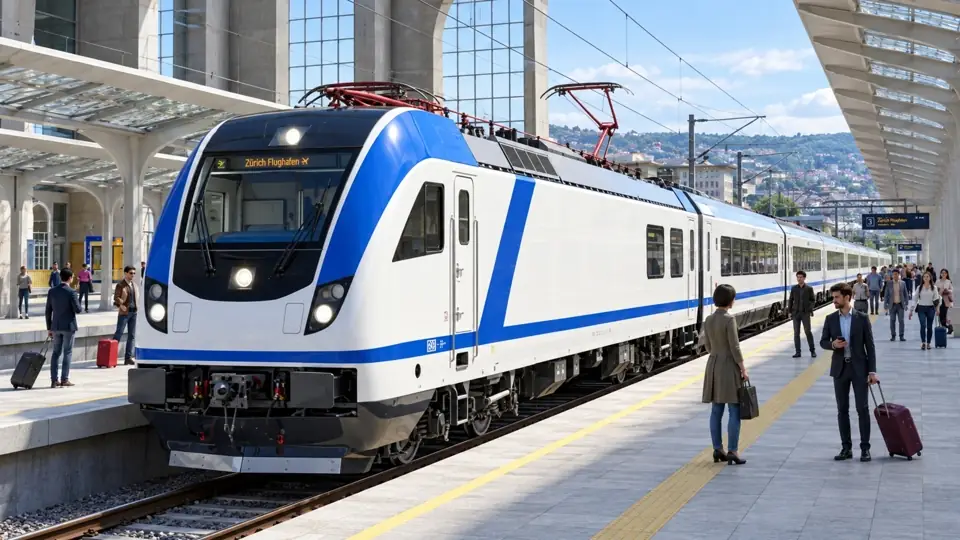
A four-car, single-deck electric multiple unit (EMU) with distributed traction, designed according to European railway standards for overhead-catenary lines and intended for regional and regional-express services. The trainset consists of four interconnected cars forming a continuous, open-plan passenger area. The structure rests on five bogies—including shared Jacobs bogies between cars—which reduces the train's weight and length. It measures approximately 74.3 m in length (coupler-to-coupler) and 2.88 m in width, with a top speed of 160 km/h. The train is designed for standard 1,435 mm gauge track and operates on a 15 kV, 16.7 Hz AC power supply. The traction system comprises four forced-air-cooled asynchronous electric motors; each motor drives a wheelset on a powered bogie via a two-stage spur gearbox. The total continuous power output at the wheels is approximately 2,000 kW, with a peak output of up to 2,600 kW, while starting tractive effort reaches 200 kN. Power is drawn from the overhead line via a roof-mounted pantograph and fed to high-voltage equipment and traction converters featuring IGBT modules, which regulate motor power and ensure smooth acceleration. During braking, the traction motors can operate in generator mode, feeding electricity back into the grid via a dedicated control system. Pneumatic suspension minimizes vibration transmission to the car body, while low-floor entry areas facilitate passenger boarding; in a standard configuration, approximately 90% of the floor area is low-floor. The interior is equipped with a climate control system, information displays, multi-purpose areas for bicycles and luggage, and designated spaces for passengers with reduced mobility. An electronic control system manages the traction equipment, performs fault diagnostics, and enables the operation of multiple coupled trainsets from a single driver's cab.
Model Information
Anton Dubina
In Progress
Locomotive
In Development
TBA