Maglev
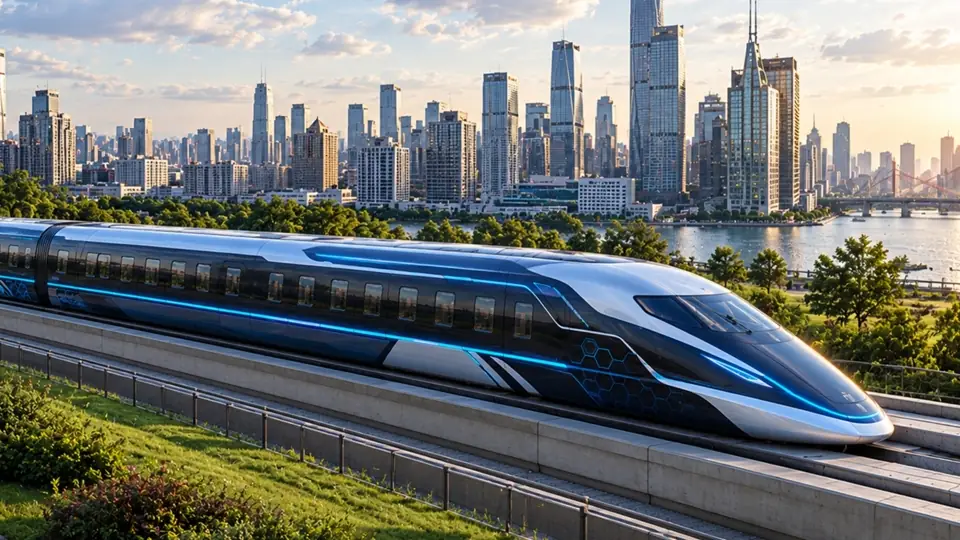
This is a high-speed passenger train utilizing electromagnetic suspension. Its design relies on wheel-less movement along a specialized guideway system. Electromagnets for levitation and lateral stabilization are located at the bottom of the train body, wrapping around the guideway beam from the sides and underneath. When electric current is applied, the electromagnets are attracted to the steel elements of the track, lifting the train above the guideway structure. An electronic control system continuously adjusts the current in the windings to maintain an operating air gap of approximately 10 mm and to control the train body's position relative to the track. Propulsion is provided by a linear synchronous motor: stator windings distributed along the route generate a moving magnetic field that interacts with the train's magnetic system to propel it forward. Adjusting the frequency and phase of the power supply allows for control over speed and direction of thrust. During braking, the electric drive can operate in generator mode, converting kinetic energy into electrical energy. The track infrastructure consists of rigid concrete guideway beams with integrated steel reaction elements and magnetic system components; these beams are mounted on reinforced concrete piers, while power supply, automation, and traffic control equipment are positioned along the line. The absence of wheel-to-rail contact eliminates the noise and wear associated with the wheel-rail interface in conventional trains. The trainset features an elongated, streamlined lead car, a smooth outer skin, broad side panels with passenger windows, and special lower fairings that enclose the magnetic equipment. Its maximum operating speed is 500 km/h. Maglev employs a combination of electromagnetic levitation, linear electric propulsion, precise electronic control, and specialized track infrastructure designed for very high-speed operation.
Model Information
Anton Dubina
In Progress
Locomotive
In Development
TBA