Horizontal Axis Wind Turbine
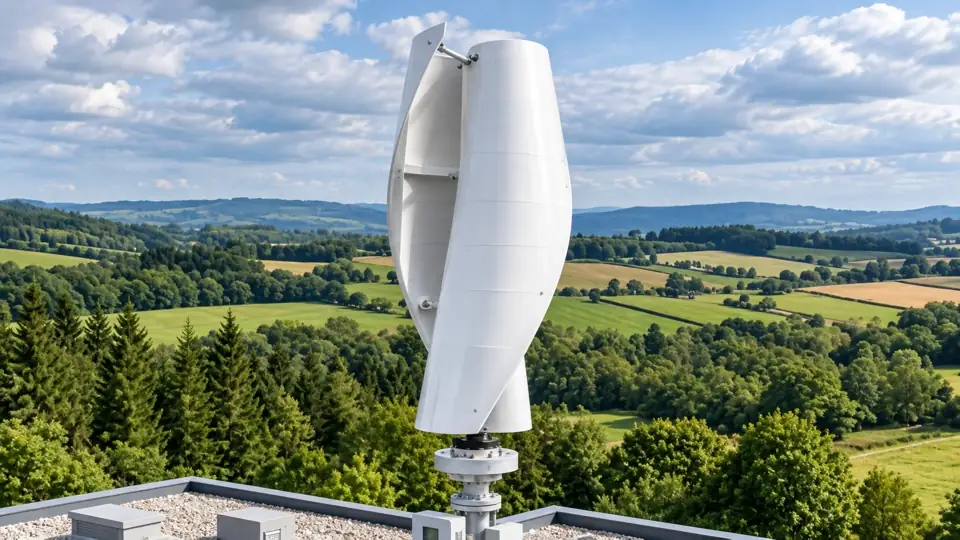
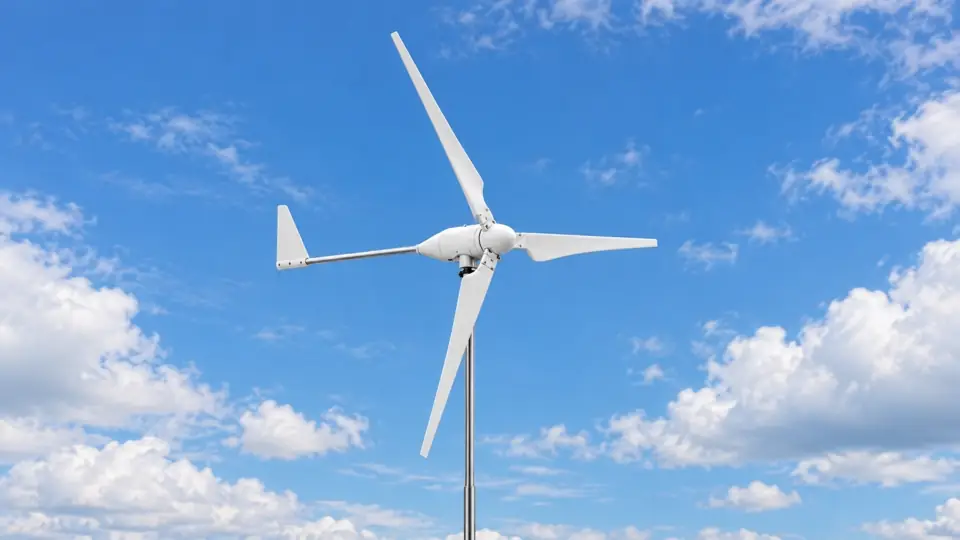
A three-blade, horizontal-axis wind turbine with a nominal power output of 5 kW, designed for both off-grid and grid-tied power supply for residential properties, farms, industrial sites, and remote infrastructure. The unit features a 4-meter diameter rotor, three aerodynamic blades made of fiberglass and carbon fiber, a hub, a protective nacelle housing, a three-phase permanent-magnet generator (using neodymium magnets), a tail boom with a stabilizing fin, and a mast-mounting assembly. The blades convert the kinetic energy of the airflow into rotational motion, driving the generator, which produces three-phase alternating current at a nominal voltage of 220 V and a rotational speed of approximately 400 rpm. When connected to a controller, the electrical energy is rectified and regulated to charge battery banks (12, 24, or 48 V); the system can also be integrated with a grid-tied inverter or used to power pumps. The turbine begins to rotate at a wind speed of approximately 3 m/s, operates within a range of 2–30 m/s, and reaches its nominal power output at a wind speed of 12 m/s. In high-wind conditions, the system employs automatic braking and passive rotor yawing to limit structural loads; it is designed to withstand extreme wind speeds of up to 60 m/s. The wind turbine itself weighs approximately 107 kg, while the controller weighs about 35 kg. Installation requires a robust mast with a secure foundation, positioned in an open area with minimal obstacles and turbulence. The horizontal-axis wind turbine is designed for long-term operation as part of renewable energy systems, enabling the generation of electricity without the consumption of fuel or the direct emission of combustion byproducts.
Model Information
Anton Dubina
In Progress
Engine
In Development
TBA