Hydroelectric Power Plant
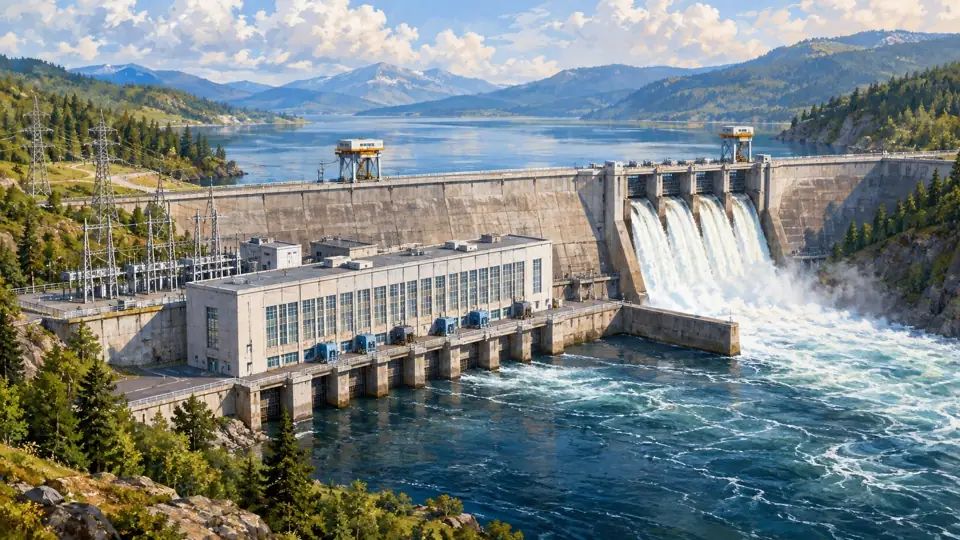
A hydroelectric power complex is designed to convert the energy of flowing water into electrical energy. The core of the structure is a concrete dam that spans the river channel, creating a reservoir where water accumulates and the necessary head (difference in water levels) is established. The station comprises spillway structures with sluice gates, water intakes, penstocks, a powerhouse, hydraulic turbines, electric generators, and a switchyard. When excess water must be released, the spillway gates are opened, directing the flow into the downstream channel. To generate electricity, water travels through penstocks to the turbine runners, transferring its kinetic and potential energy and causing the shaft to rotate. The shaft is connected to the generator rotor, where the mechanical energy of rotation is converted into electric current via electromagnetic induction. The generated electricity is fed to step-up transformers, which increase the voltage for long-distance transmission via power lines. Station operations are managed by an automated system that monitors water flow, turbine rotational speed, electrical load, equipment temperature, and the status of protective devices. Adjustable turbine guide vanes regulate water flow according to power demand, while sluice gates allow the penstocks to be shut off during equipment shutdowns or maintenance. The powerhouse is equipped with overhead cranes for the installation and repair of heavy machinery. The dam can also serve functions such as river flow regulation, flood control, and water supply. The power plant's output depends on the water flow rate, the hydraulic head (drop height), and the efficiency of the generating units. The plant's main advantages are high energy conversion efficiency, a long equipment service life, the ability to rapidly adjust power output, and the absence of any need to burn fuel for electricity generation.
Model Information
Anton Dubina
In Progress
Factory
In Development
TBA