International Space Station (2026)
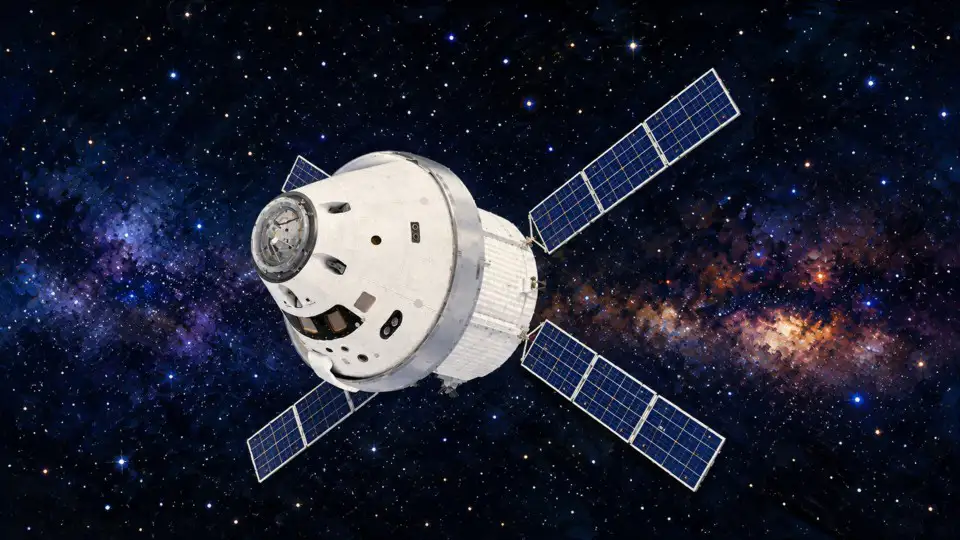
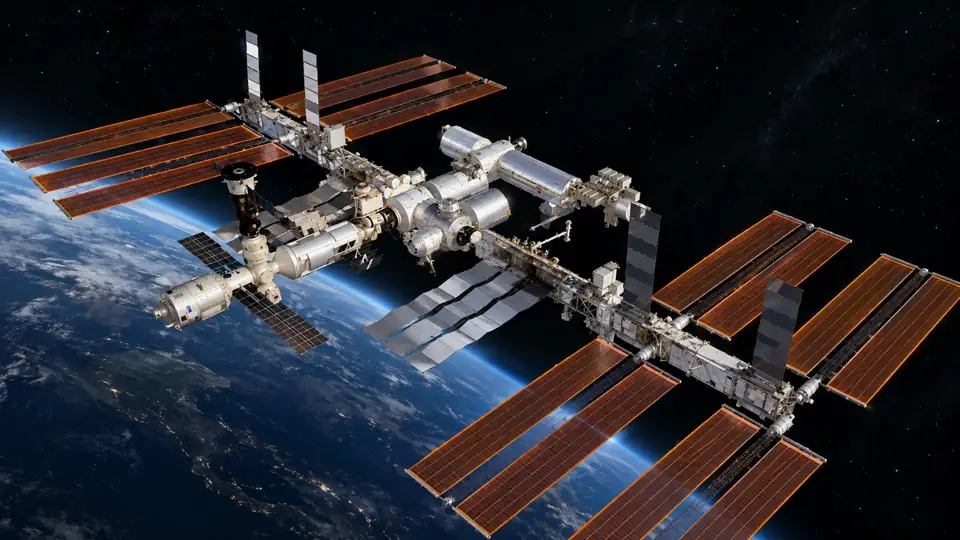
A large orbital research complex in low Earth orbit, the structure of which—as of early 2026—includes pressurized living and laboratory modules, a truss structure, solar arrays, thermal control system radiators, docking ports, external science platforms, and the Canadarm2 robotic manipulator. The station's core consists of the Russian modules Zarya, Zvezda, Nauka, Rassvet, Poisk, and Prichal; the US modules Unity, Destiny, Harmony, Tranquility, Cupola, and Quest; the European Columbus module; and the Japanese Kibo laboratory complex; additional commercial elements include the Bishop airlock and the BEAM inflatable module. An integrated truss approximately 94 meters long serves as the structural backbone for equipment and solar arrays, while eight main solar panels, supplemented by deployable IROSA arrays, provide power to the complex. The station measures approximately 109 meters in length, 108 meters in width, and 45 meters in height, with a mass of around 420 tonnes; its pressurized volume is approximately 1,005 cubic meters, of which 388 cubic meters constitute habitable space. Electrical power is generated by solar arrays with a total capacity of roughly 75–90 kW and distributed among life-support systems, scientific equipment, communications, lighting, and drive mechanisms. Canadarm2 is used for moving cargo, servicing external equipment, and conducting spacecraft operations. The station orbits Earth at an altitude of approximately 370–460 km with an orbital inclination of 51.6°, traveling at a speed of about 7.6–7.7 km/s (27,500 km/h) and completing one orbit approximately every 90 minutes. The ISS is designed for long-term crew presence, conducting experiments in microgravity, testing space technologies, Earth observation, and validating systems required for future crewed missions. As of early 2026, the station remained in operation as part of the international orbital complex, with Expedition 74—which began on December 8, 2025—carrying out scientific and operational tasks on board.
Model Information
Anton Dubina
In Progress
House
In Development
TBA