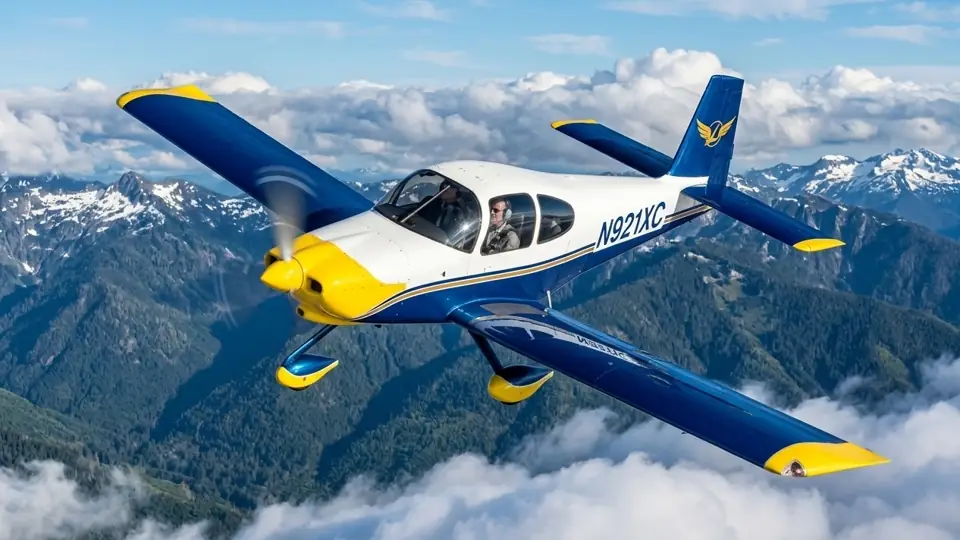
Single-Engine Low-Wing Airplane
A four-seat, single-engine general aviation aircraft designed for high-speed touring, family travel, and operations from airfields with relatively short runways. This low-wing aircraft features an all-metal semi-monocoque fuselage and wings constructed from aluminum panels joined by rivets—a design that combines a relatively low structural weight with the necessary airframe strength. A composite upper cabin section, paired with upward-opening doors, provides convenient access to the four seats, which are arranged in two rows. The tricycle landing gear consists of two main struts made of resilient steel, along with a steerable nose wheel. The propulsion system comprises a six-cylinder, air-cooled, horizontally opposed, fuel-injected piston engine with an output of up to 260 hp. Mounted in the forward fuselage, the engine drives a two-blade, variable-pitch propeller. As the engine runs, the energy from fuel combustion is converted into the rotation of the crankshaft, while the propeller generates the thrust required for the aircraft to accelerate and fly. The low-mounted wing provides lift, while the ailerons, elevator, and rudder allow for control over roll, pitch, and yaw. The cockpit is equipped with standard flight instruments and can be outfitted with modern digital avionics, navigation displays, an autopilot system, and communication equipment. The aircraft has a length of 7.5 meters, a wingspan of 9.7 meters, and a maximum takeoff weight of 1,230 kg—when powered by a 260 hp engine. The cruising speed reaches approximately 275–320 km/h, depending on the flight mode and altitude, while the service ceiling is around 6,100 m. The fuel capacity is approximately 227 liters. The combination of a four-seat cabin, high speed, payload capacity, and fuel efficiency makes this aircraft a practical choice for long-distance flights and private aviation.
Model Information
Anton Dubina
In Progress
Airplane
In Development
TBA