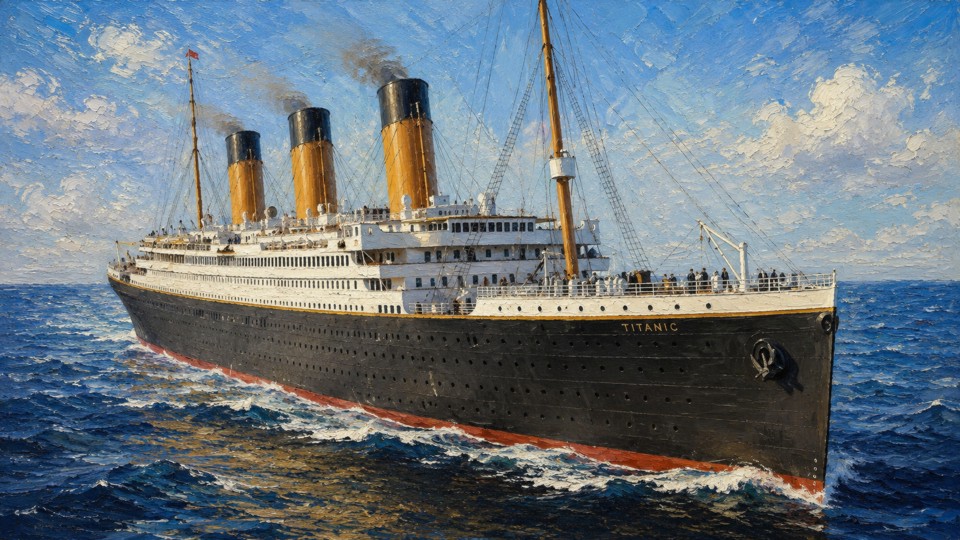
Passenger steamship Titanic
A British transatlantic passenger liner owned by the White Star Line, built by the Harland and Wolff shipyard in Belfast and entering service in 1912. The vessel measured approximately 269 meters in length and 28 meters in width, with a gross tonnage of about 46,300 tons. Its design featured a steel hull, a double bottom, watertight bulkheads, multiple decks, engine and boiler rooms, cargo spaces, passenger cabins, restaurants, lounges, and service areas. The propulsion system consisted of 24 steam boilers, two four-cylinder reciprocating steam engines, and a Parsons steam turbine, driving three propellers. Coal was burned in the boiler furnaces to generate steam, which powered the reciprocating engines and the turbine; mechanical energy was then transmitted via propeller shafts to the propellers, generating thrust. The two outer propellers were driven by the reciprocating engines, while the central one was driven by the turbine. Steering was controlled by a central rudder located aft of the propellers. Anchoring systems, mooring equipment, and cargo-handling gear were located at the bow and stern, while the upper decks housed lifeboats, promenade areas, and superstructures. The interior was divided into passenger classes with separate cabins and public areas; the layout also included galleys, boiler rooms, engine rooms, and baggage and cargo compartments. For its time, the *Titanic* represented a complex engineering system integrating steam propulsion, mechanical power transmission, steering gear, pumps, ventilation, electric lighting, and radio communications. The liner was designed for scheduled transatlantic voyages between Europe and North America, combining high passenger capacity with speed and cruising range that were exceptional for its class.
Model Information
Anton Dubina
In Progress
Car
In Development
TBA